

How Search Engines Use AI to Rank Content: A Powerful Shift That Changed SEO Forever
Search engines use AI to rank content in ways that are far more advanced than most people realize. What once depended on simple keyword matching has now transformed into an intelligent system that understands meaning, intent, and human behavior. This powerful shift has completely redefined how websites earn visibility, traffic, and trust online.
Today, artificial intelligence sits at the core of modern search engines, shaping every result users see. To succeed in SEO, it is essential to understand how AI evaluates and ranks content.
Why Search Engines Use AI to Rank Content
Search engines exist to serve users, not websites. As user expectations increased, traditional algorithms failed to deliver accurate results. AI solved this problem.
Search engines use AI to rank content because it allows them to:
- Understand real search intent
- Interpret language naturally
- Measure content quality accurately
- Learn from user behavior
- Detect spam and manipulation
Instead of ranking pages based on tricks, AI ranks content based on value and relevance.
How AI Understands Search Intent
One of the most important reasons search engines use AI to rank content is intent recognition.
AI systems analyze:
- Query structure
- Word relationships
- Context and modifiers
- Historical search behavior
- Location and device signals
For example, when someone searches “how to improve SEO ranking”, AI knows the user wants actionable guidance—not definitions. Content that offers step-by-step strategies ranks higher.
This intent-based ranking ensures users find answers faster and more accurately.
Natural Language Processing and AI Ranking
Search engines use AI-powered Natural Language Processing (NLP) to understand content like a human reader.
NLP allows search engines to:
- Recognize synonyms and related phrases
- Understand topic depth
- Identify content relevance
- Evaluate sentence clarity and flow
This is why modern SEO no longer requires repeating the same keyword unnaturally. When search engines use AI to rank content, they reward semantic relevance, not keyword stuffing.
Content Quality Signals Used by AI
AI plays a critical role in evaluating content quality.
Search engines use AI to rank content by analyzing:
- Originality and uniqueness
- Informational depth
- Logical structure
- Readability
- Accuracy and trustworthiness
Thin content, copied articles, or misleading pages are quickly identified and ranked lower. Helpful, well-researched content performs better over time.
According to Google’s own documentation, helpful content is prioritized when it is written for people, not algorithms
(Source: Google Search Central)
User Engagement and AI Ranking Decisions
AI does not stop evaluating content after it ranks. It continues learning from user interaction.
Search engines use AI to rank content based on:
- Click-through rate (CTR)
- Time spent on page
- Scroll behavior
- Bounce rate
- Return visits
When users stay longer and engage with content, AI treats it as a positive signal. Pages that fail to satisfy users gradually lose rankings.
This is why user experience and content clarity are essential for long-term SEO success.
Semantic Search and Topic Authority
Search engines use AI to rank content based on topics, not just keywords.
AI evaluates:
- How well a website covers a subject
- Internal links between related articles
- Consistency of expertise
- Content relevance across multiple pages
Websites that demonstrate topic authority consistently rank better than sites publishing isolated articles.
This approach is widely discussed by SEO experts at Moz and Search Engine Journal, emphasizing content depth over keyword targeting
(Source: Moz SEO Guide, Search Engine Journal)
Machine Learning and Continuous Ranking Updates
AI-powered ranking systems continuously learn and adapt.
Machine learning enables search engines to:
- Analyze millions of searches daily
- Identify performance trends
- Adjust rankings automatically
- Improve result accuracy
This means rankings are dynamic. Content that remains useful and updated can improve over time, while outdated content may decline—even without algorithm updates.
AI and Spam Detection
Another critical reason search engines use AI to rank content is spam prevention.
AI detects:
- Keyword stuffing
- Link schemes
- Auto-generated content
- Cloaking techniques
- Low-value affiliate pages
Modern AI systems identify unnatural behavior patterns with high accuracy. Ethical SEO practices are rewarded, while manipulation leads to ranking loss.
Personalization in AI-Based Ranking
Search engines use AI to personalize results based on:
- Location
- Search history
- Language
- Device type
- Time and context
This means two users searching the same term may see different results. AI ensures relevance for each individual user, improving satisfaction and accuracy.
Visual and Multimedia Content Evaluation
AI now evaluates more than text.
Search engines use AI to rank content by analyzing:
- Images through visual recognition
- Videos through speech-to-text
- Page layout and design
- Mobile friendliness
- Loading speed
Optimized visuals and accessible design enhance rankings and user experience.

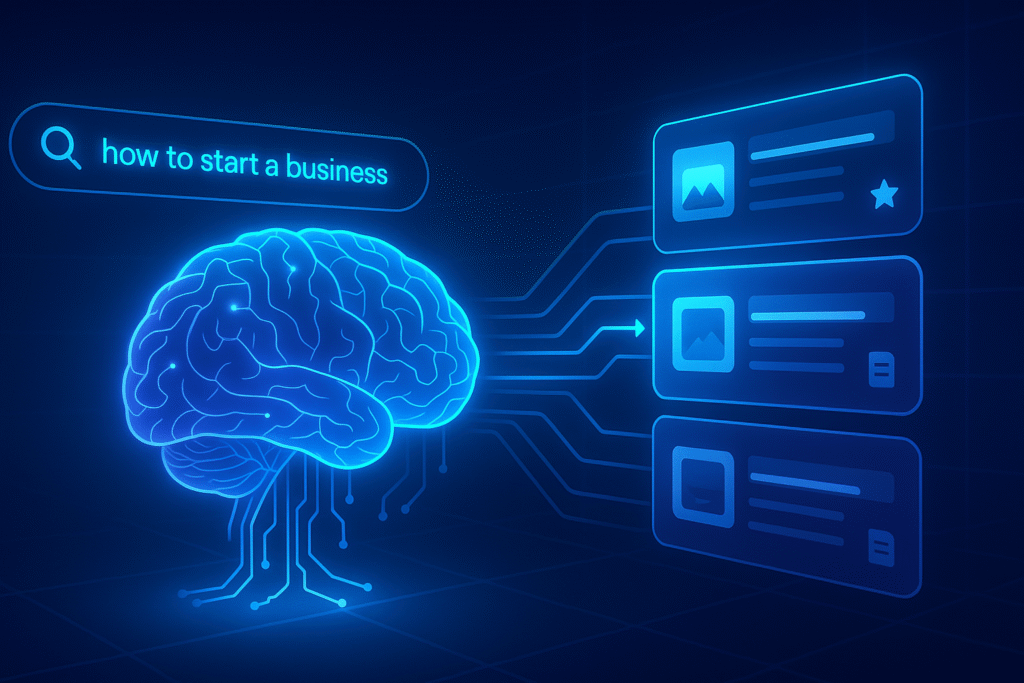
Image Optimization (As Required)
Image Recommendation:
- Image Type: AI + search engine illustration
- File Name:
search-engines-use-ai-to-rank-content.jpg - Alt Text: Search engines use AI to rank content effectively
(Use this image once inside the blog for Rank Math image SEO)
Why AI-Based Ranking Favors Human Content
Despite its complexity, AI rewards the same things humans value:
- Clear explanations
- Honest information
- Logical flow
- Useful insights
- Easy readability
When search engines use AI to rank content, they favor articles that genuinely help users rather than manipulate algorithms.

Final Conclusion
Search engines use AI to rank content by focusing on intent, quality, engagement, and trust. Keywords still matter, but they are no longer the foundation of SEO. Meaning, relevance, and user satisfaction now drive rankings.
To achieve strong visibility and a Rank Math score above 80, content creators must:
- Write for users first
- Use keywords naturally
- Build topic authority
- Optimize user experience
- Maintain content freshness
When content delivers real value, AI recognizes it—and rewards it.